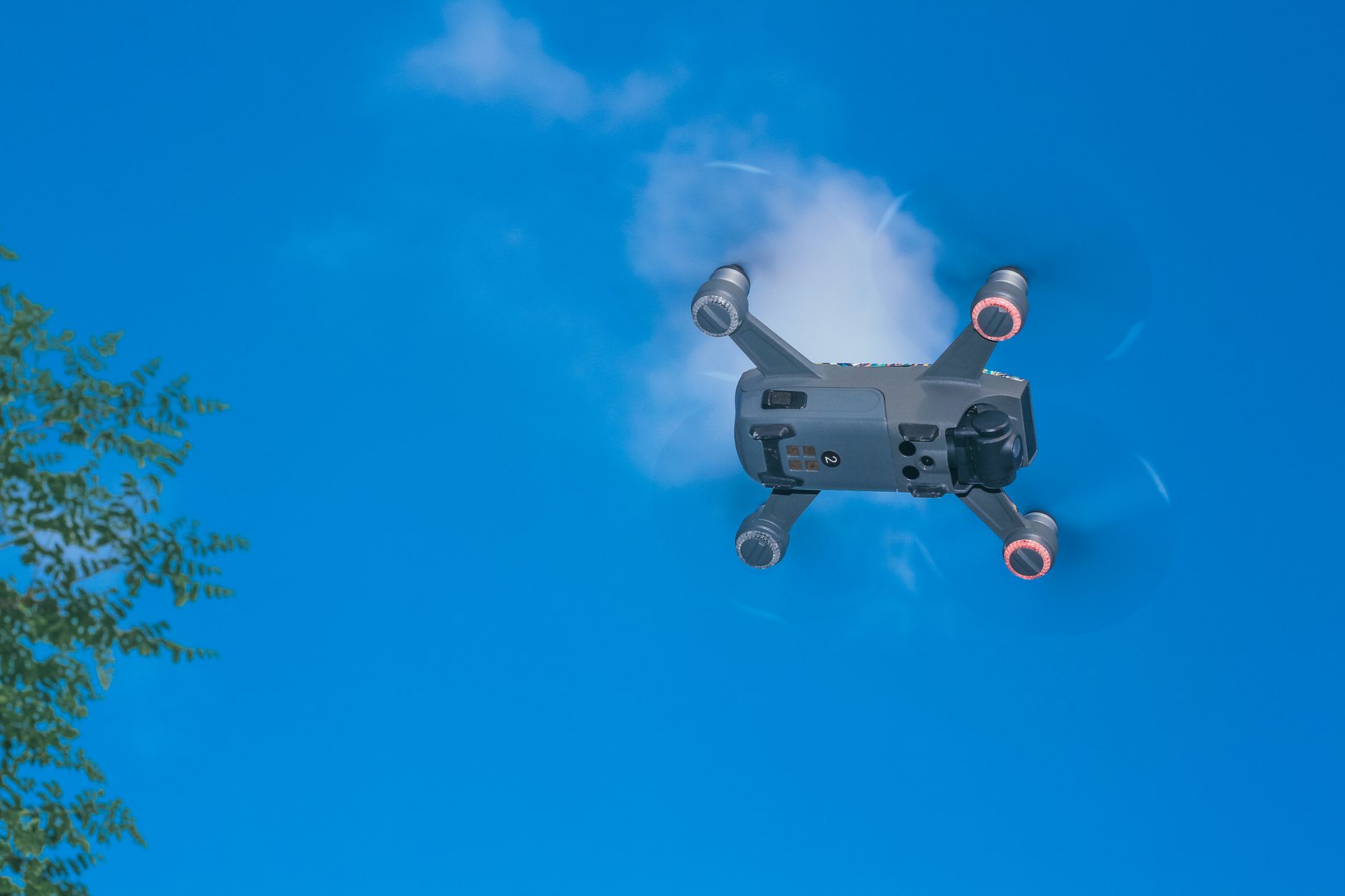
DUBAI — A drone that renders itself nearly invisible to the human eye by spinning at 25 rotations per second has emerged from a US research lab, a development that UAE defence contractors, logistics operators and drone-security firms are already tracking closely given the country’s dense commercial and regulatory drone ecosystem.
Engineers at Northwestern University built the disc-shaped aircraft to exploit a quirk of human vision rather than relying on camouflage materials or radar-absorbing coatings. By spinning fast enough, the drone’s outline blurs into the background from a stationary observer’s perspective, making it difficult to track visually even in daylight. The design, described in research covered by IEEE Spectrum and New Scientist, uses the spin itself for lift and stability, reducing the need for separate rotors and simplifying the airframe.
Why It Matters for UAE Airspace Security
The UAE has invested heavily in counter-drone systems to protect airports, ports and critical infrastructure across Abu Dhabi and Dubai, following regional incidents involving unauthorised drone incursions. A stealth platform that defeats visual detection — even if radar and RF countermeasures still apply — raises the bar for security providers such as EDGE Group, which develops layered counter-UAS technology. Analysts expect the innovation to accelerate demand for multi-sensor detection stacks that do not rely solely on optical tracking, a segment already growing within the UAE’s defence-tech cluster.
Commercial and Investment Angles
Beyond security, the spinning design’s mechanical simplicity could appeal to UAE logistics and inspection firms operating in Masdar City and Dubai South’s drone corridors, where reduced part counts translate into lower maintenance costs for fleets used in pipeline and solar-farm inspection. Venture investors in Abu Dhabi’s Hub71 and Dubai’s DIFC innovation arms have shown appetite for niche aerospace hardware plays, and a licensable spin-stabilised airframe patent could attract early-stage interest. The technology remains a research prototype, with payload capacity and flight duration still unpublished, meaning commercial deployment in the Gulf is unlikely before further engineering validation and regulatory review by the UAE General Civil Aviation Authority.