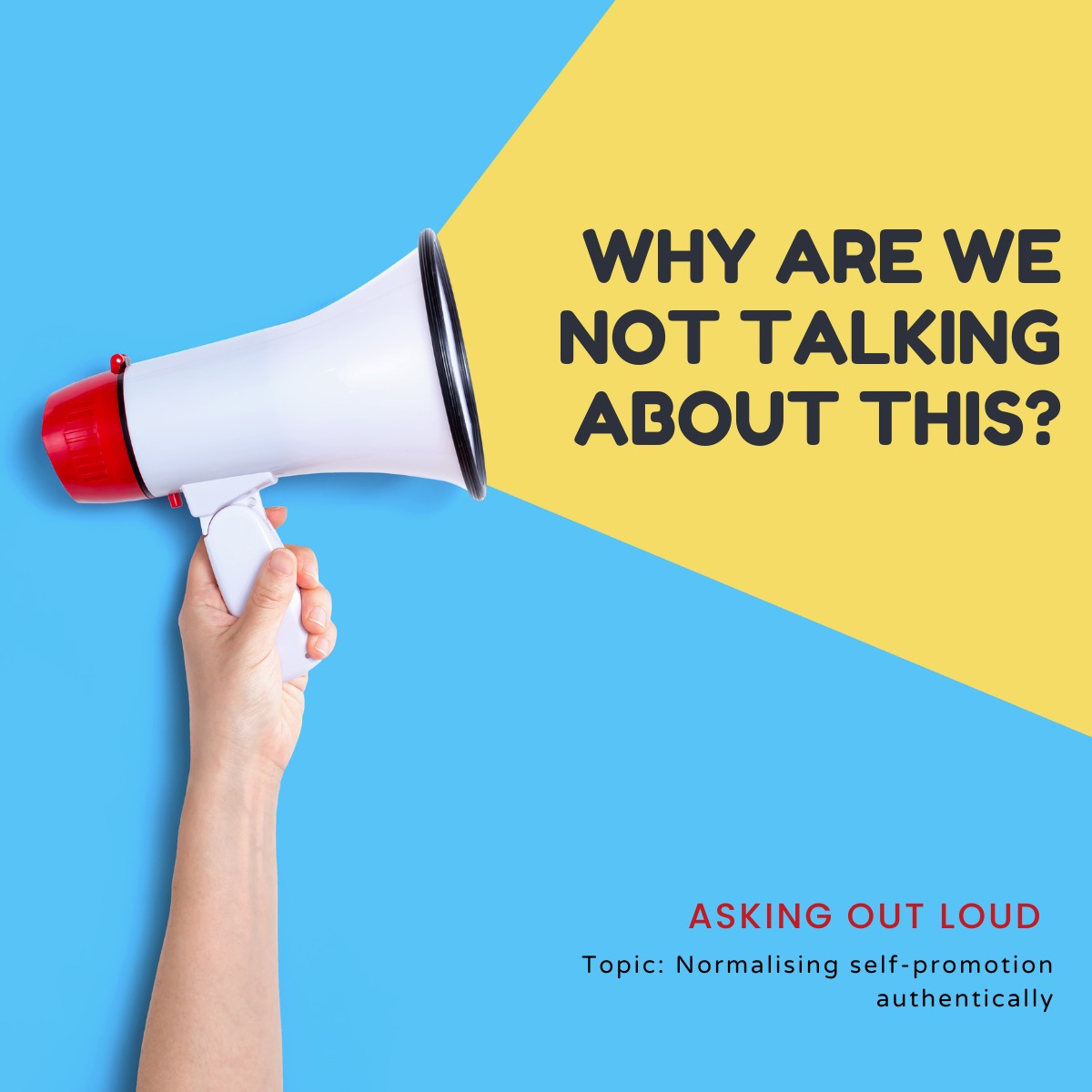
For a long time, self-promotion made me uncomfortable.
Not the “asking for help” kind, I’ve always believed in the mantra: if you don’t ask, you don’t get. Asking for support felt natural. What didn’t come naturally was talking about my own work. Publicly owning my expertise. Sharing what I offer. Saying, “This is what I’m great at.” And I’ve realised I’m far from alone.
I Thought Great Work Would Speak for Itself. I Was Wrong.
As a community builder, podcaster, and marketing strategist, I spend a lot of time around founders, business owners, and ambitious professionals. One pattern keeps showing up. There are people who confidently tell the world what they do, openly ask for introductions, collaborations, opportunities, referrals, or new clients. Then there are equally talented people who quietly keep doing incredible work, hoping the right people will eventually notice. For years, I was in that second group.
I relied on referrals. Word of mouth brought opportunities, and I believed my work would speak for itself. Thankfully, it often did. But eventually I had to admit something uncomfortable.
Great work doesn’t automatically create visibility.
What really shifted my thinking was simply paying attention. I watched founders with less experience, fewer case studies, and sometimes no active clients confidently communicate what they did. They weren’t pretending to be experts; they were simply making themselves visible.
They talked about their services. They shared their wins. They asked for opportunities. They told people exactly who they wanted to meet. And doors opened.
That became a turning point for me because I realised I already had the experience, the results, and the credibility. The only thing missing was my willingness to communicate it. So I started changing my approach.
Over the past few months, I’ve intentionally become more visible. I’ve spoken more about the work I do across events, community building, podcasting, partnerships, and marketing strategy. Not perfectly, and not always comfortably, but consistently.
And consistency changes everything.
I’m still not at 100%, but I’m probably at 80% and that progress happened much faster than I expected simply because I kept showing up.
What’s been even more interesting is seeing this reflected inside my own community, Events by Fari. I regularly encourage members to share their wins, promote their businesses, celebrate milestones, and tell people what they’re building. Yet very few actually do and when I ask why, the answers are almost always the same:
“I don’t want to sound salesy.”
“I don’t want to bother people.”
“It feels awkward talking about myself.”
Even inside a supportive community and that tells me something important:
The biggest barrier often isn’t the audience. It’s ourselves.
I often thought we should normalise self-promotion but after reflecting on it I understood in fact we should we should normalise asking for what we want.
Too often, we wait for someone to ask, “How can I help?” before mentioning we’re looking for a collaboration, a client, an introduction, a venue, an investor, or a new opportunity. If your network doesn’t know you’re looking for strategic partnerships, they can’t introduce you. If people don’t know you’re available for speaking engagements, they won’t recommend you. If nobody knows you’re launching a podcast, hiring, consulting, or expanding into a new market, those opportunities remain invisible.
Equally important, people also need to know what you can offer, not just what you need!
Every one of us has knowledge, experience, skills, relationships, or opportunities that could genuinely help someone else. The more clearly we communicate both what we’re looking for and how we can help others, the more opportunities naturally emerge.
That’s one of the biggest lessons I’ve learned from building communities. Communities thrive because people know how to help each other. Networks become powerful when information flows.
Opportunities multiply when intentions become visible.
Communicating your value is a skill and so is asking but neither is about being loud or constantly selling yourself. It’s about creating clarity because people can’t support what they don’t know exists.
So if you’ve been quietly doing great work while waiting for the “right time” to share it, consider this your reminder.
Talk about what you do
Share what you’re building
Celebrate your progress
Tell people what you’re looking for
And tell them how you can help in return
The most visible people aren’t always the most experienced. They’re often just the ones who make it easy for others to understand what they do, where they’re going, and how to open the right doors.
Visibility creates opportunity and clarity creates connection
And that’s where the best opportunities usually begin, meaningful connections and open communication.
I’d love to know how you approach self promotion and communicating your services?
Connect with me and share your thoughts.