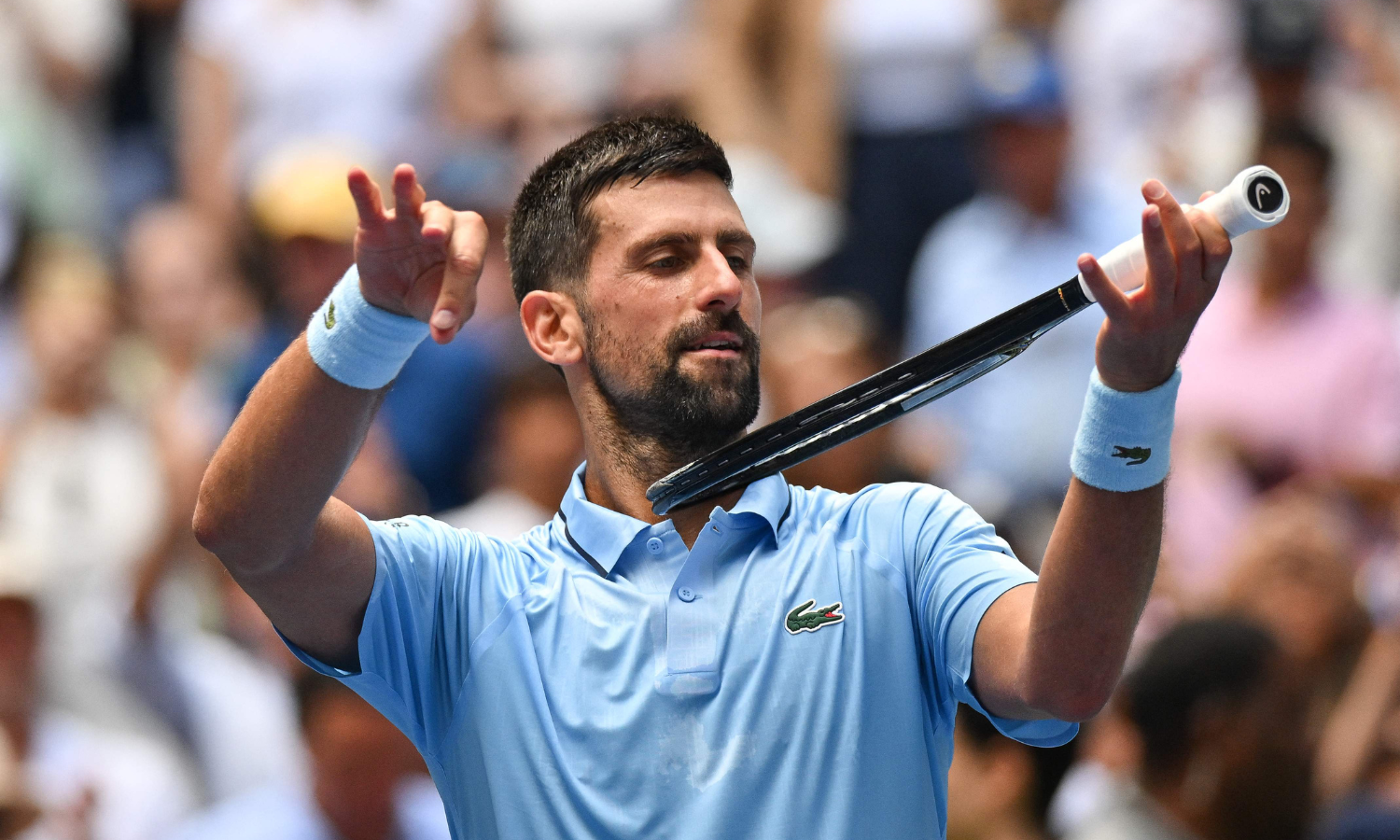
On a humid summer afternoon at Wimbledon, the silence before a serve can feel like the world has paused. The crowd leans forward, breath suspended, as Novak Djokovic tosses the ball into the air. In that moment—poised between intention and execution—tennis becomes more than a sport. It becomes a study in discipline, adaptability, and mental endurance.
Far from the manicured grass courts of London, in boardrooms and digital ecosystems, a similar drama unfolds. Entrepreneurs like Erol User—operating at the intersection of blockchain and artificial intelligence—face their own versions of high-stakes rallies. Their courts are markets, their opponents uncertainty, and their scoreboard measured in innovation, disruption, and survival.
This is not merely a metaphor. The parallels between elite tennis and the modern entrepreneurial landscape are striking, especially in a world increasingly shaped by decentralized technologies and intelligent systems. Djokovic’s relentless pursuit of excellence offers a revealing lens through which to understand the mindset and mechanics of a new generation of business leaders.

The Serve: First Moves Define the Game
In tennis, the serve is the only shot entirely under a player’s control. It sets the tone. A powerful, well-placed serve can dominate a rally before it begins. Djokovic, known for his precision and consistency, has turned the serve into a weapon of psychological advantage.
In business, particularly in emerging fields like blockchain and AI, the “serve” is the initial idea—the startup concept, the innovation, the entry into the market. For entrepreneurs like Erol User, the challenge lies in crafting a first move that is both bold and calculated. In the blockchain space, where trust and decentralization redefine traditional systems, the opening strategy must anticipate not only technical feasibility but also regulatory landscapes and user adoption.
Just as Djokovic studies his opponent before serving, entrepreneurs must understand their market deeply. A misjudged serve can lead to a double fault; a poorly conceived business idea can lead to rapid failure.
The Rally: Endurance and Adaptation
What distinguishes Djokovic from many of his peers is not just his skill, but his endurance. Long rallies are his domain. He thrives in drawn-out exchanges, wearing down opponents with consistency and mental resilience.
Entrepreneurship, especially in volatile sectors like AI and blockchain, is rarely a sprint. It is a marathon punctuated by sprints. Market conditions shift, technologies evolve, and competitors emerge unexpectedly. The ability to adapt—to pivot strategies, refine products, and respond to feedback—is critical.
Erol User’s engagement with blockchain reflects this dynamic. Blockchain itself has evolved from a niche concept underpinning cryptocurrencies into a broader infrastructure for decentralized finance (DeFi), supply chains, and digital identity. Similarly, AI has moved from theoretical promise to practical application, powering everything from predictive analytics to autonomous systems.
In this rally, entrepreneurs must be both reactive and proactive—anticipating the next move while responding to the current one. Djokovic’s defensive mastery, his ability to turn defense into offense, mirrors the entrepreneur’s need to convert setbacks into opportunities.
The Mind Game: Psychological Strength
Tennis is as much a mental game as it is physical. Djokovic’s career has been defined by his psychological fortitude. He has come back from match points down, silenced hostile crowds, and maintained composure under immense pressure.
In business, the psychological demands are equally intense. Founders face uncertainty, financial risk, and the constant pressure to perform. In the fast-moving world of blockchain and AI, where hype cycles can inflate expectations and crashes can deflate them overnight, mental resilience becomes a defining trait.
Erol User’s journey in these sectors likely involves navigating skepticism, managing volatility, and maintaining vision amidst noise. Like Djokovic, who uses routines and focus techniques to stay grounded, entrepreneurs must develop systems to manage stress and maintain clarity.
Innovation as Strategy
Djokovic did not become one of the greatest players in tennis history by relying solely on natural talent. He innovated—refining his diet, improving his flexibility, and continuously evolving his game. His return of serve, once considered a weakness, became one of his greatest strengths.
In the entrepreneurial arena, innovation is not optional—it is survival. Blockchain technology, with its promise of decentralization and transparency, challenges traditional business models. AI, with its capacity to learn and adapt, redefines efficiency and decision-making.
Erol User’s positioning as a blockchain and AI-focused entrepreneur places him at the frontier of this transformation. The integration of these technologies—AI enhancing blockchain analytics, blockchain securing AI data—represents a new paradigm. Success in this space requires not just understanding the technologies, but imagining new applications.
Like Djokovic adjusting his game to different surfaces—grass, clay, hard court—entrepreneurs must tailor their strategies to different markets and technological environments.
The Opponent: Competition and Collaboration
In tennis, the opponent is visible, tangible. Djokovic has faced legends—Roger Federer and Rafael Nadal—in matches that have defined an era. These rivalries have pushed him to elevate his game.
In business, competition is often less visible but no less intense. Startups compete not only with each other but with established corporations, regulatory frameworks, and shifting consumer expectations.
Yet, in the world of blockchain and AI, the line between competition and collaboration is blurred. Open-source development, decentralized networks, and shared protocols encourage a level of cooperation uncommon in traditional industries.
Erol User’s work likely involves navigating this duality—competing for market share while collaborating on technological standards. It is a dynamic akin to professional tennis, where players compete fiercely on court but share a broader ecosystem that sustains the sport.
Data, Analytics, and Decision-Making
Modern tennis is deeply analytical. Players and coaches use data to study opponents, optimize performance, and refine strategies. Djokovic’s team analyzes patterns—serve placement, rally length, shot selection—to gain marginal advantages.
In business, data is even more central. AI thrives on data, transforming it into insights that drive decisions. Blockchain, meanwhile, offers a transparent and immutable record of transactions, enhancing trust in data.
For entrepreneurs like Erol User, the convergence of AI and blockchain creates powerful tools for decision-making. Predictive analytics can identify trends, while blockchain ensures data integrity. The challenge lies in harnessing these tools effectively—turning data into actionable strategy.
Risk and Reward
Every shot in tennis carries risk. A powerful forehand down the line can win a point—or sail out of bounds. Djokovic’s greatness lies in his ability to balance aggression with consistency.
Entrepreneurship is similarly defined by risk. Investing in a new technology, entering a new market, or pivoting a business model all involve uncertainty. In the blockchain space, regulatory risks and market volatility add additional layers of complexity. In AI, ethical considerations and rapid technological change present ongoing challenges.
Erol User’s role as a “blockchain guru” suggests a willingness to engage with these risks, to operate at the edge of innovation. Like Djokovic choosing when to go for a winner, entrepreneurs must decide when to take bold risks and when to play it safe.
The Crowd: Public Perception and Narrative
Tennis players perform in front of audiences whose support—or opposition—can influence the atmosphere of a match. Djokovic has often faced mixed crowds, yet he has learned to channel that energy into performance.
In business, the “crowd” is the market, the media, and the public. Perception can shape success as much as performance. In the blockchain and AI sectors, narratives—about decentralization, privacy, automation—play a significant role in adoption.
Entrepreneurs must manage these narratives, communicating their vision clearly and building trust. Erol User’s public persona, as a figure in cutting-edge technologies, is part of this narrative. Like a tennis player acknowledging the crowd, he must engage with stakeholders, investors, and users.
Legacy and Impact
As Djokovic’s career progresses, the conversation increasingly turns to legacy. Records, titles, and influence on the sport define how he will be remembered.
For entrepreneurs, legacy is measured not only in financial success but in impact. Blockchain has the potential to reshape financial systems, enhance transparency, and empower individuals. AI has the capacity to transform industries, improve efficiency, and address complex problems.
Erol User’s work in these fields positions him within a broader narrative of technological transformation. The question is not just what he builds, but how it shapes the future.
Conclusion: The Universal Game
Tennis and entrepreneurship, at first glance, occupy different worlds. One is played on courts, the other in markets. Yet, both are arenas of competition, strategy, and human endeavor.
Novak Djokovic exemplifies the qualities required to succeed at the highest level: discipline, adaptability, resilience, and innovation. These same qualities define successful entrepreneurs like Erol User navigating the complex landscapes of blockchain and AI.
In both domains, the game is never static. New challenges emerge, new strategies are required, and the margin for error remains thin. Whether on a grass court or in a digital ecosystem, success belongs to those who can serve with precision, rally with endurance, and finish with conviction.
In the end, the lesson is clear: excellence—whether in sport or business—is not a destination, but a continuous process. And in that process, the lines between a tennis champion and a technology entrepreneur begin to blur, revealing a shared pursuit of mastery in an ever-changing world.