Dubai just made it a lot easier to get a residency visa through property ownership. The emirate has removed the AED750,000 ($204,000) minimum property value that used to decide who qualifies for its 2-year property investor visa, opening the door to a much bigger pool of buyers.
Until now, if you wanted residency through real estate, you needed to own a property worth at least AED750,000. That price floor is gone. It’s a significant shift for anyone in the UAE or GCC thinking about buying property and staying on longer term, and it comes at a time when Dubai’s emirates news pages have been full of property market updates.
What changes for Dubai property investor visa applicants
The 2-year investor visa has long been one of Dubai’s main tools for pulling in foreign capital through real estate. It lets investors live in the UAE as long as they hold a qualifying property. Previously, the AED750,000 threshold shut out a lot of mid-tier buyers who simply couldn’t stretch to that price point but still wanted a foothold in Dubai property and the residency that came with it.
Now that barrier is gone. The change is expected to widen eligibility significantly, especially for buyers who were sitting just below the old cut-off. For anyone browsing Dubai apartments or smaller units and wondering if residency was even an option, this news changes the calculation.
There’s also a joint ownership angle worth knowing about. Each investor in a joint purchase now needs to hold a stake of at least AED400,000. That means two people buying an AED800,000 property together can each get their own residency visa. Before this update, that kind of shared-ownership structure didn’t qualify at all. It’s a small technical tweak with a big practical effect for friends, couples or business partners who want to pool funds and still walk away with residency each.
Why this matters for Dubai’s real estate market right now
This policy shift lands as Dubai’s property market keeps posting strong numbers. According to Dubai Land Department figures, total real estate transactions in the emirate reached AED68.56bn ($18.67bn) in April 2026, up more than 20 per cent, a sign that confidence in the residential sector isn’t slowing down.
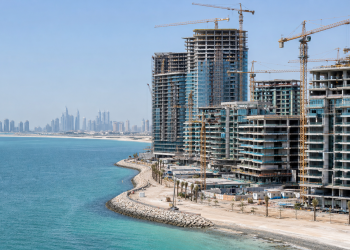
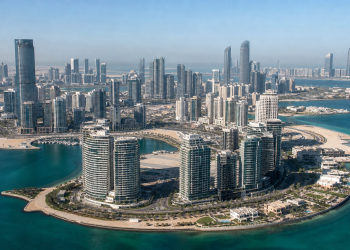
Waterfront and off-plan properties have been a big part of that momentum. Dubai Islands, for example, has become one of the city’s most active spots for new-home sales, recording AED2.6bn ($708m) across 691 transactions in April alone, with off-plan sales there topping AED7.9bn ($2.15bn) between January and April. Developer DHG Properties recently started construction on its sold-out Helvetia Marine project there, with handover due in the first quarter of 2028, another sign that buyer appetite for Dubai property remains strong even before this visa change kicks in.
Removing the price floor on the investor visa fits into that bigger picture. It gives developers and agents another selling point for mid-range projects, and it gives buyers who were priced out of the residency route a genuine reason to look again. Regionally, the GCC property sector is also entering what analysts at Alpen Capital call a more disciplined growth phase, with residential supply across the Gulf projected to rise from around 6.26 million units in 2025 to 7.28 million by 2030. The UAE’s own residential stock is expected to grow by 390,000 units in that period, reaching 1.51 million units by 2030, with much of that growth focused on apartment-led developments in Dubai and villas and waterfront communities in Abu Dhabi.
Put together, these numbers suggest Dubai isn’t just relying on price growth to attract buyers. It’s also lowering the entry barriers for residency, which could bring in a wave of buyers who previously assumed the investor visa route wasn’t for them.
For now, the big takeaway is simple: if you’ve been holding off on a Dubai property purchase because you thought you needed AED750,000 to get residency, that’s no longer the case. What’s worth watching next is whether this change actually shifts buying patterns toward mid-tier apartments and joint purchases, and whether Dubai’s transaction numbers keep climbing as a result. Given how the emirate’s Arabian Business reporting frames it, this looks like part of a wider push to unify and simplify Dubai’s Golden Visa, property and retiree residency services.