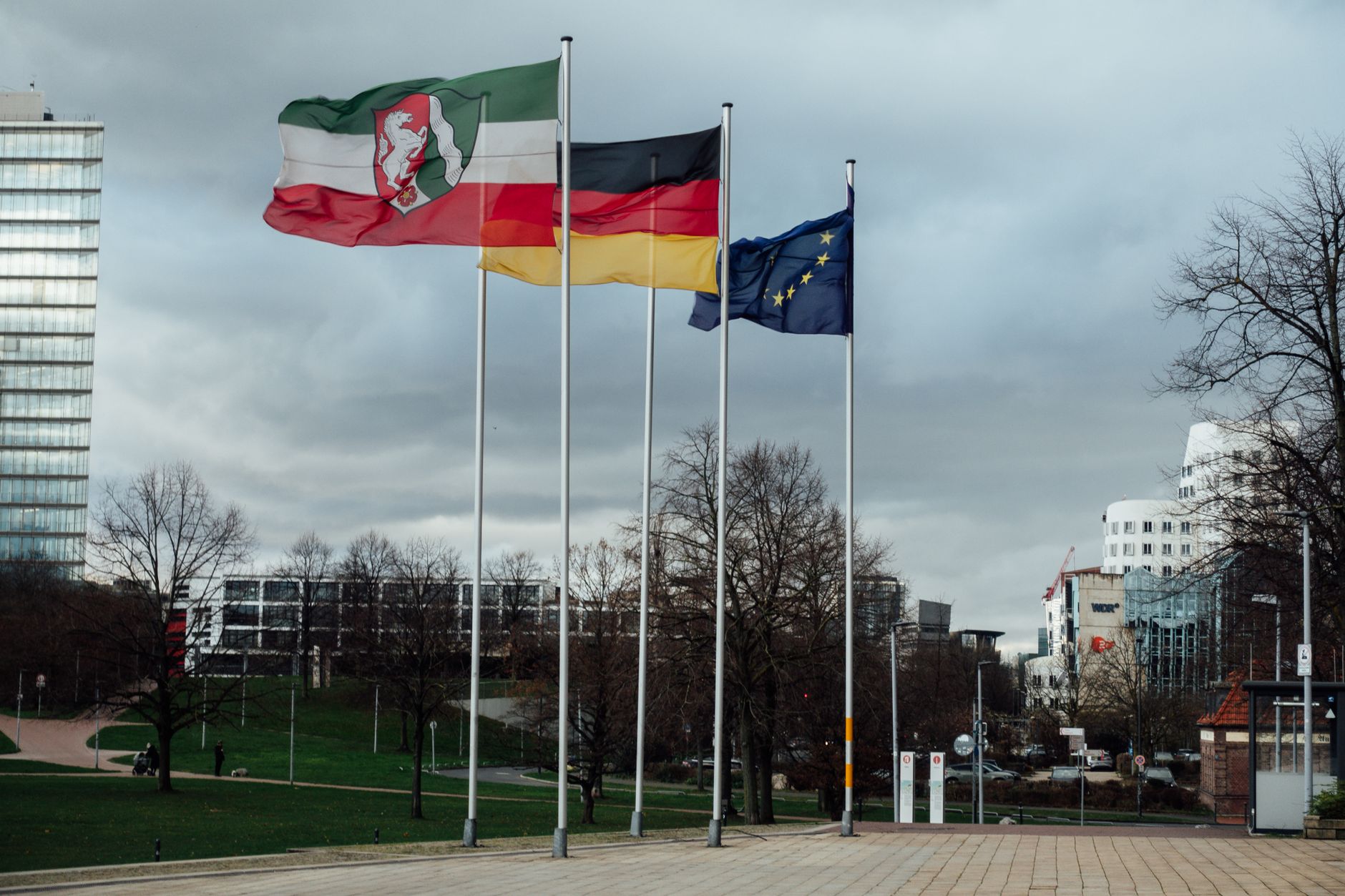
UAE President His Highness Sheikh Mohamed bin Zayed Al Nahyan has arrived in Germany for an official state visit, in a trip that underscores the deepening diplomatic and economic ties between Abu Dhabi and Berlin. The visit follows established protocol for high-level state engagements and is expected to include talks with senior German leadership on a range of bilateral and international issues.
State visits of this nature typically serve as a platform for reaffirming political relations while opening space for discussions on trade, investment, and security cooperation. The arrival in Berlin marks the latest in a series of diplomatic engagements between the UAE and major European economies, as Abu Dhabi continues to position itself as a key interlocutor between the Gulf region and Europe.
Trade and Investment Ties in Focus
Germany remains one of the UAE’s most significant trade partners in Europe, with commercial links spanning technology, industrial manufacturing, and energy. Business and investment flows between the two countries have grown in recent years, reflecting mutual interest in diversifying economic partnerships beyond traditional sectors.
Discussions during state visits of this kind commonly touch on expanding trade frameworks, exploring joint ventures, and identifying opportunities for technology transfer and industrial collaboration. Given Germany’s standing as Europe’s largest economy and a hub for advanced manufacturing and engineering, the relationship carries strategic weight for the UAE’s own economic diversification agenda, which has prioritised sectors such as renewable energy, advanced technology, and industrial innovation.
For the UAE and the wider Gulf, engagement with Germany also carries broader regional significance. Abu Dhabi has increasingly sought to strengthen its role as a bridge between Gulf economies and European markets, leveraging its geographic position and existing trade infrastructure to facilitate investment flows in both directions. Strengthened ties with Berlin are seen as part of a wider UAE strategy to diversify international partnerships amid shifting global economic and geopolitical dynamics.
Security and Regional Cooperation on the Agenda
Beyond economic matters, state visits between the UAE and European nations frequently address defence cooperation and shared security concerns. Germany and the UAE have historically maintained dialogue on regional stability, given the UAE’s proximity to conflict-affected areas and its role in Gulf security architecture.
Officials on both sides are expected to use the visit to discuss matters of mutual interest, including regional security developments and avenues for closer coordination on defence-related issues. Such exchanges typically complement the economic dimension of state visits, reflecting the multifaceted nature of UAE-Germany relations.
The visit is being viewed as a continuation of the UAE’s broader diplomatic outreach across Europe, an effort that has included similar high-level engagements with other major European economies in recent years. For UAE and GCC audiences, the trip highlights the country’s ongoing efforts to secure strategic partnerships that support long-term economic diversification, technological advancement, and regional stability objectives.
No specific agreements or outcomes had been announced at the time of the president’s arrival in Berlin, with further details expected to emerge as the state visit programme progresses.