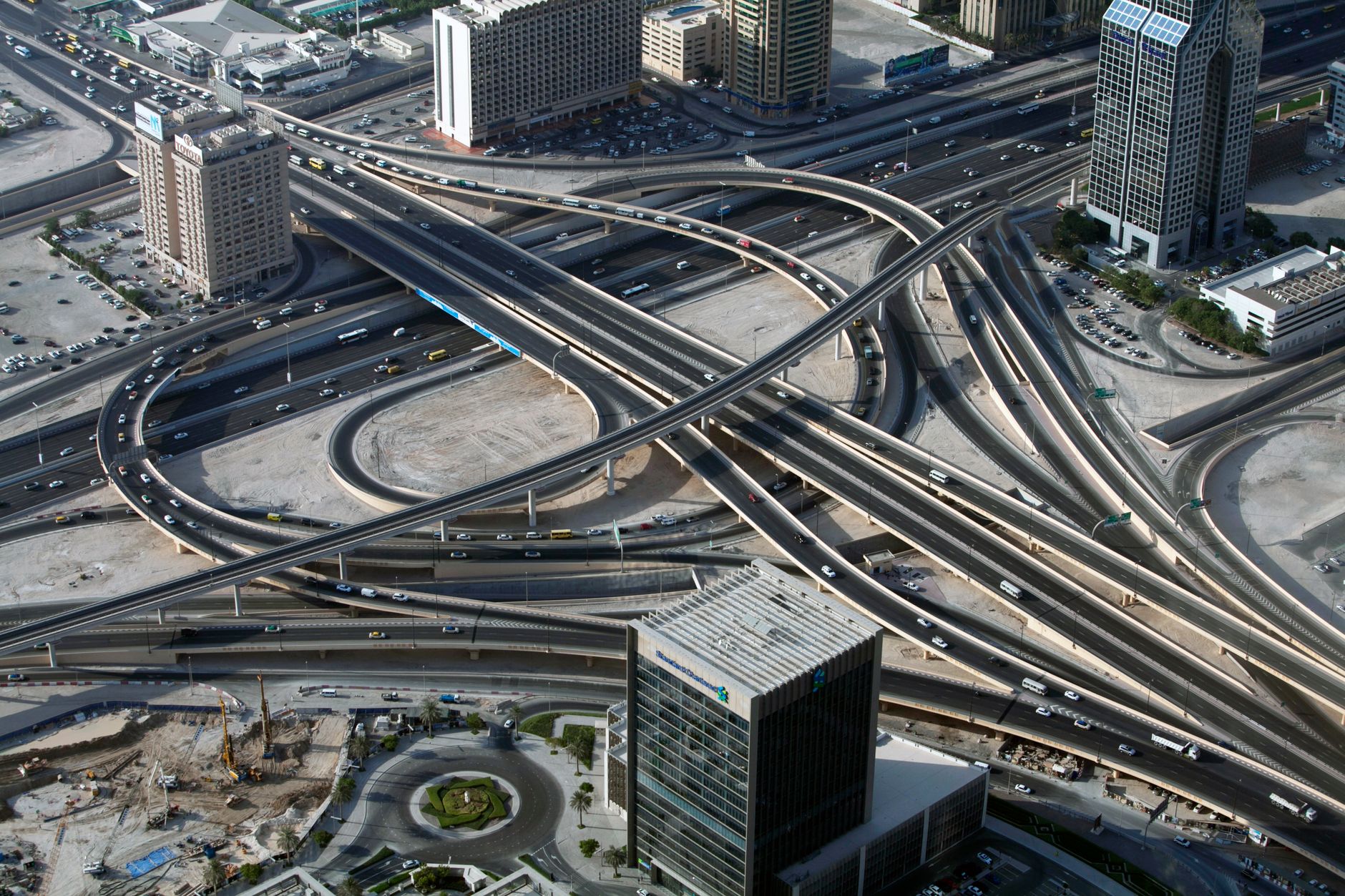
Dubai’s Roads and Transport Authority (RTA) has introduced a set of traffic improvements at Al Qiyadah Intersection, aiming to ease congestion and improve the flow of vehicles through one of the emirate’s busier junctions during rush-hour periods. The move forms part of the authority’s continuing effort to streamline traffic movement at key intersections across Dubai, as the emirate’s road network contends with steadily rising volumes of daily commuter and commercial traffic.
While the RTA has not released detailed engineering specifications for the works — such as whether the upgrades involve changes to signal timing, lane reconfiguration, or the introduction of smart traffic technology — the authority has confirmed that the intersection has been identified for enhancement as part of its broader roads optimisation programme. Al Qiyadah Intersection sits along a corridor frequently used by motorists travelling between residential and commercial areas of Dubai, making it a point of recurring congestion during morning and evening peak hours.
For commuters who regularly pass through the junction, the practical outcome expected from the intervention is a reduction in wait times and smoother transitions through the intersection, particularly during the periods when traffic volumes are at their highest. Motorists and businesses that rely on efficient movement through this corridor — including logistics and delivery operators — stand to benefit most directly from any reduction in delays, given that even modest improvements at high-traffic junctions can have a cumulative effect on travel times across a wider network.
Part of Dubai’s Wider Roads Strategy
The upgrade at Al Qiyadah Intersection is consistent with the RTA’s long-standing approach of continuously reviewing and upgrading traffic infrastructure at strategic points across Dubai, rather than limiting improvements to newly developed areas alone. The authority has, over recent years, undertaken a series of intersection and junction improvements aimed at reducing traffic pressure on the emirate’s road network as population growth, tourism activity and business expansion continue to push up vehicle numbers.
Dubai’s road authorities have consistently framed such projects as necessary to keep pace with the emirate’s growth trajectory, with traffic engineering interventions often introduced ahead of or alongside broader urban development in surrounding areas. Although the RTA has not specified a completion timeline or provided projected figures for how much congestion is expected to ease as a result of the works at Al Qiyadah Intersection, the initiative reflects the kind of incremental, junction-level intervention that has become a routine feature of Dubai’s traffic management strategy.
For residents and expatriates who make up the bulk of Dubai’s daily commuting population, localized improvements of this kind are often felt directly in day-to-day travel experience, even when they do not attract the same attention as larger infrastructure announcements such as new road corridors or metro extensions. Given the emirate’s dependence on efficient road networks to support its business environment, logistics sector and tourism industry, incremental upgrades at high-traffic points such as Al Qiyadah Intersection are likely to remain a recurring feature of the RTA’s operational focus in the period ahead.
The RTA has not indicated whether further details on the scope or timeline of the Al Qiyadah works will be released, though the authority typically provides updates on major traffic projects through official statements as work progresses.