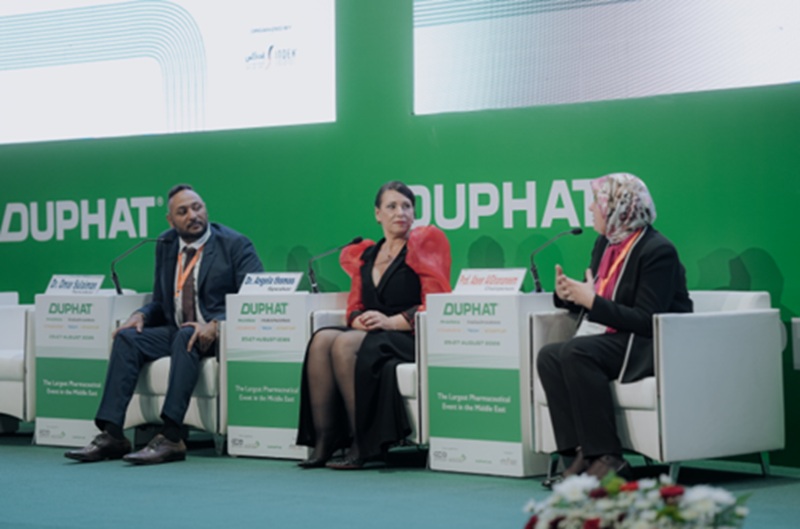
Scientific progress shaped the agenda at DUPHAT 2026, but one question reached beyond medicines and technology: who would deliver the healthcare of the future? Held from 25 to 27 August 2026 at the Dubai World Trade Centre, the Dubai International Pharmaceuticals and Technologies Conference and Exhibition brought together pharmaceutical manufacturers, pharmacists, healthcare professionals, researchers, policymakers and industry leaders from around the world. The event explored advances in pharmaceutical science, digital health, artificial intelligence, medication safety and healthcare delivery.
It also highlighted a fundamental industry challenge: innovation could only create lasting value when healthcare systems had enough qualified professionals to implement it effectively. Among the keynote speakers was Dr. Angela Thomas, Founder of Dubai Docs Fast Track (DDFT) and Founder and Strategic Director of Angel Success Consulting. According to the official DUPHAT 2026 conference programme, she delivered the keynote “Healthcare Workforce Sustainability in the Era of Aging Populations and AI Integration” on the opening day.
Healthcare Workforce Sustainability Beyond Recruitment
In her keynote, Dr. Thomas addressed one of the most urgent challenges facing healthcare systems worldwide: how to attract, integrate and retain qualified professionals while demand for medical services continued to rise. Healthcare workforce sustainability involved more than filling vacant positions. It required longterm planning, effective onboarding, continuous professional development and working environments capable of retaining skilled people.
Aging Populations Increased Demand for Care
Aging populations and the growing prevalence of chronic illnesses had placed additional pressure on healthcare systems. At the same time, shortages of qualified professionals had limited the capacity of many countries to meet rising demand.This imbalance made workforce planning a strategic priority. Hospitals, clinics and healthcare authorities needed professionals with strong clinical expertise. They also required people who could adapt to emerging technologies, multidisciplinary care models and increasingly international patient populations.
AI Strengthened Healthcare but Did Not Replace Its Human Core
Artificial intelligence had already begun to reshape diagnostics, clinical decision-making, administration and patient communication. However, Dr. Thomas argued that technology alone could not create sustainable healthcare systems. AI could support professionals, improve efficiency and reduce administrative pressure. Yet patient care still depended on human judgement, ethical responsibility, empathy and trust. The future workforce therefore required more than technical competence. Healthcare professionals also needed the ability to use new technologies responsibly while preserving the human relationship at the centre of medicine.
International Medical Talent Became Strategic Infrastructure
Dr. Thomas connected healthcare workforce sustainability with the increasing mobility of medical professionals. Dubai had strengthened its position as a destination for pharmaceutical investment, specialised healthcare, medical innovation and international talent. This growth had created opportunities for doctors seeking to advance their careers or establish healthcare businesses in the UAE. However, attracting international professionals was only the first step. Their qualifications had to be assessed, verified and aligned with the country’s regulatory requirements before they could contribute effectively to the local healthcare system.
Entering Dubai Required More Than a Licence Application
International doctors had to navigate several interconnected stages, including qualification recognition, Primary Source Verification through DataFlow, professional assessments, registration and licence activation. They also needed to consider employment, visa arrangements, clinical positioning and, where relevant, company formation or business development. Without a clear market-entry strategy, doctors could face incomplete applications, regulatory delays and costly decisions. This gap between professional ambition and operational readiness formed the basis of the Dubai Docs Fast Track pathway.
Dubai Docs Fast Track Supported the Full Medical Journey
Dubai Docs Fast Track provided international doctors with a coordinated pathway from their initial qualification assessment to their professional entry into the UAE. Applicants could begin with the official DHA self-assessment tool to receive an initial indication of whether they met the requirements for working in a DHA-licensed healthcare facility.
The DDFT Pathway Connected Regulation With Market Entry
Depending on each doctor’s qualifications, specialty and objectives, the DDFT pathway could include:
• Assessment of qualifications and professional experience
• Review and preparation of application documents
• Primary Source Verification through DataFlow
• Guidance through the relevant UAE licensing process
• Support with required professional assessments
• DHA professional registration
• Professional licence activation
• Employment and healthcare-facility coordination
• Visa, company-formation and market-entry support
• Strategic guidance for building a sustainable medical career or business
By connecting these stages, DDFT helped international doctors approach the UAE market with greater clarity and reduce preventable delays.
Registration Was a Milestone, Not the Destination
Professional registration confirmed that a doctor met the requirements for an approved professional title. However, it did not automatically lead to a sustainable career. Doctors still needed an appropriate healthcare facility, a suitable licence activation route and a realistic understanding of the local market. Those seeking to establish a business also had to evaluate commercial structures, regulatory responsibilities and long-term positioning. This broader approach connected medical licensing with career development and healthcare workforce sustainability.
Pharmaceutical Innovation Depended on Workforce Readiness
Dr. Thomas’s keynote added a workforce perspective to DUPHAT’s focus on pharmaceutical and technological advancement. Pharmaceutical companies could develop new therapies. Technology providers could improve clinical systems. Regulators could establish standards for safety and quality. Yet qualified professionals remained responsible for translating those advances into better patient outcomes.
DUPHAT Connected the Wider Healthcare Ecosystem
Across its conference sessions, exhibition areas and networking opportunities, DUPHAT connected pharmaceutical businesses with healthcare providers, researchers, regulators and medical professionals. This collaboration reflected an increasingly important reality: medicines, technology, regulation and human expertise could no longer develop in isolation. By positioning healthcare workforce sustainability as a shared responsibility, Dr. Thomas expanded the discussion beyond recruitment. Her keynote presented workforce readiness as a prerequisite for innovation, resilience and sustainable healthcare growth.
A Human Strategy for the Future of Healthcare
DUPHAT 2026 demonstrated that the future of healthcare would depend on more than scientific discovery. Aging populations would continue to increase demand. Artificial intelligence would continue to transform clinical and operational processes. International mobility would become increasingly important as healthcare systems competed for qualified professionals. The organisations and cities best prepared for this future would be those that combined innovation with strategic workforce planning. Through her keynote, Dr. Angela Thomas brought this human dimension to the centre of the pharmaceutical conversation. Her contribution highlighted how structured pathways such as Dubai Docs Fast Track could help qualified international doctors move from professional interest to meaningful participation in the UAE healthcare system.